Most people treat “becoming a Pilates instructor” like it’s a single decision: pick a cert, post on Instagram, start teaching. That’s how you end up exhausted, underpaid, and weirdly resentful of something you used to love.
A better approach is less romantic and more effective: define the job you actually want, earn the credential that matches it, and build skill + business systems in parallel. Not sequentially. In parallel.
One-line truth: you’re not just learning Pilates, you’re building a service career.
Your career vision: get uncomfortably specific
Picture your first year. Not in a vibes-only way, like you can point to numbers and say, “Yes, this is working.” If you’re ready to deepen your expertise and enrol in a pilates instructor course, keep the following anchors in mind:
1) Who you serve.
Postpartum clients? Runners? Desk-bound professionals with cranky hips? Older adults? Gen-pop who want a strong spine and a calmer nervous system? The more defined the “who,” the easier everything else gets: programming, pricing, referrals, even the words you use while cueing.
2) Where you teach.
A studio schedule, private home sessions, a corporate gym, your own space, or a hybrid. Each environment pulls different skills out of you (and pays differently).
3) What “on track” looks like.
Milestones aren’t motivational quotes. They’re proof.
A few good, non-fluffy milestones:
– 8, 15 recurring clients (or members) by month 6
– \$1,500, \$3,000/month revenue by month 3 if part-time; more if full-time
– One referral a week by month 9 (this is the real signal)
– Two credible local relationships: a PT clinic, massage therapist, or studio owner
Now, this won’t apply to everyone, but if you can’t describe your ideal week, days, hours, class types, and income targets, you’re basically asking luck to run your business plan.
Hot take: choose certification based on your future clients, not prestige
Look, a shiny brand name doesn’t automatically make you employable or effective. I’ve met beautifully certified teachers who can’t manage a mixed-level class safely. I’ve also seen “less famous” training produce instructors with surgical-level cueing.
Here’s the decision filter I’d use if I were starting over:
What are you actually certified to teach?
Some programs lean heavily mat. Others emphasize apparatus. A few prepare you well for special populations; many don’t (even if they say they do).
What will studios in your area hire?
Call or email three studios you’d like to work for. Ask what certifications they respect, what their onboarding looks like, and what they pay. That 20-minute research sprint can save you months of regret.
Recertification + continuing ed: read the fine print
Aftercare matters. Mentorship matters. Program structure matters. Cost is real, but value is bigger.
One concrete data point, because guessing is expensive: According to the U.S. Bureau of Labor Statistics, the 2024 median pay for fitness trainers and instructors was $46,480/year (source: BLS, Occupational Employment and Wage Statistics). Pilates can exceed that, especially privately, but only if your training supports high retention and confident programming.
Core teaching skills: you get good by doing the boring reps
You don’t need a thousand fancy exercises. You need the fundamentals to come out of your mouth cleanly while you’re watching five things at once.
In practice, your early skill stack should be:
– Cueing that lands (simple, layered, not a TED Talk)
– Alignment and load management (what’s safe today for this body)
– Progressions/regressions on the fly (no awkward pauses)
– Rapport (because clients don’t renew with robots)
Here’s the thing: “Knowing Pilates” isn’t the same as teaching Pilates. Teaching is part biomechanics, part timing, part psychology.
A fast way to improve (I’ve seen this work repeatedly) is to run deliberate mini-sessions:
- Teach 10 minutes to a real human
- Get one piece of feedback
- Rewrite your cues
- Teach the same 10 minutes again within 48 hours
That loop is unsexy. It also works like a cheat code.
And yes, film yourself sometimes. You’ll hate it. Do it anyway (sorry).
Your 0, 12 month plan: build the business while you build the body of work
Some instructors wait until they feel “ready” to think about money and marketing. That’s a great strategy if your goal is to stay broke.
A lean first-year business plan has a few essential components:
Positioning: niche, promise, boundaries
Offers: private sessions, duets, small groups, mat classes
Pricing: a structure you can defend without apologizing
Schedule: realistic capacity (teaching is physically and socially demanding)
Simple metrics: leads, conversions, retention, revenue per hour
Quick opinion: don’t underprice to “get experience.” You’ll attract clients who churn, haggle, and treat you like a commodity. Price fairly, deliver intensely, improve rapidly.
Equipment and space decisions should match your model. If you’re mat-focused and mobile, your “must-have” list is short. If you’re apparatus-forward, your capital plan needs to be intentional. (Buying expensive gear before you have client demand is a classic rookie mistake.)
Client acquisition, but make it a system, not a mood
A client funnel sounds corporate until you’re staring at an empty schedule.
Think of it like this:
Awareness → Trust → Trial → Commitment → Long-term retention
And no, “posting more” isn’t a strategy.
What works in the real world:
– A quick assessment or intro offer that doesn’t feel gimmicky
– Testimonials that describe outcomes (“back pain reduced,” “returned to running”) not adjectives (“amazing class!”)
– A referral script you use every week, out loud
– Consistent follow-up (most instructors quit one message too early)
Track a few numbers like an adult:
– cost per lead
– conversion rate
– retention over 90 days
– client lifetime value
If you don’t measure, you can’t improve. You can only hope.
One-line paragraph, because it’s true:
Consistency beats charisma.
Studio job or freelance life? Pick based on your personality, not your ego
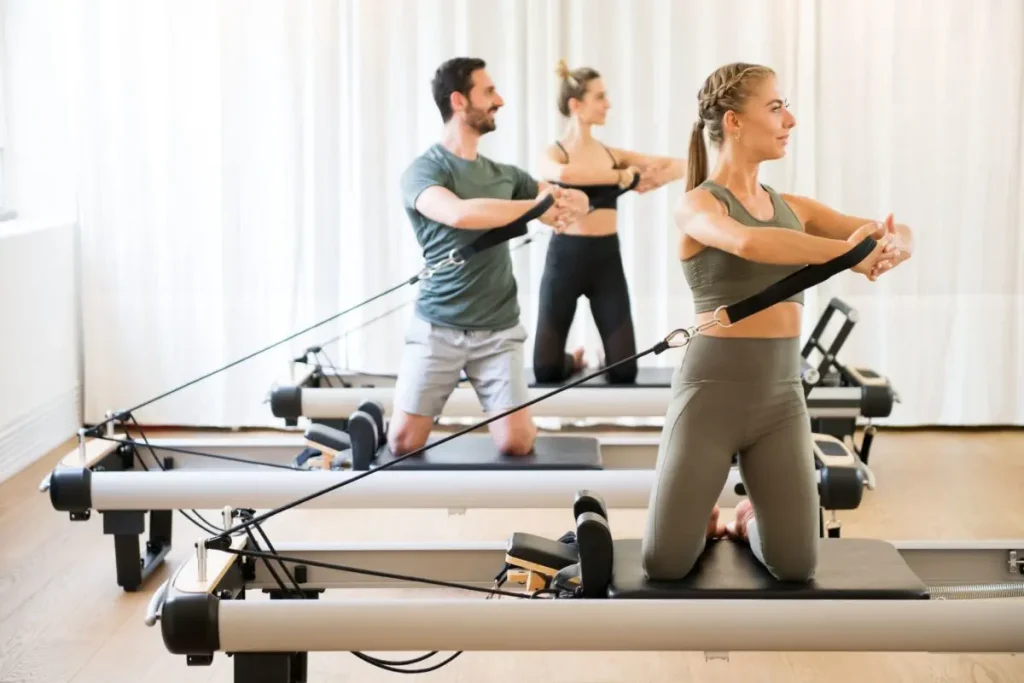
Studio path (structured, faster learning curve)
You get built-in foot traffic, mentorship opportunities, and a brand that lends credibility. You also get less control, over schedule, pricing, sometimes even how you teach.
If you’re early and want reps fast, studios can be gold.
Freelance path (autonomy, higher ceiling, more chaos)
You set pricing, choose clients, and can scale in smart ways. But you’ll earn every inch of stability through outreach, systems, and handling slow weeks without spiraling.
In my experience, the best compromise for many new instructors is a hybrid: 2, 3 days in a studio for volume and mentorship, plus a small private roster you build quietly and ethically.
Protect your wellbeing, because burnout is a business killer
Teaching Pilates looks calm. It’s not always calm. You’re performing attention for hours: scanning bodies, managing personalities, staying upbeat, making split-second adjustments.
So build guardrails:
– Teach in blocks, not scattered all day
– Leave whitespace for admin and recovery
– Put policies in writing (cancellations, late arrivals, packages)
– Stop “just squeezing one more client in” every week
Here’s a small but powerful habit: schedule one non-negotiable recovery practice like it’s a client. Walks. Strength training. Silence. Therapy. Whatever actually refills you.
Because if you’re fried, your cueing gets sloppy, your patience shrinks, and clients feel it.
The real job: become the instructor people don’t want to replace
Credentials get you in the room. Skill keeps you in the room. Reputation fills your calendar.
If you want a clean north star, use this: be the safest, clearest, most reliable teacher in your area. That’s not flashy, but it’s how you build a career that lasts, and pays.